Thursday, 29 November 2012

Samsung launches Windows 8 tablets and notebooks|Specifications,Reviews,Pricing

Windows 8 tablets based notebooks
Samsung Electronics today launched a slew of Windows 8-based devices, including the ATIV Smart PC and ATIV Smart PC Pro, a touch-enabled notebook - Series 5 ULTRA Touch, a Series 9 Ultrabook and an AMD-based Series 5 Ultrabook. With high prices these tablets are the best tabletes that support windows 8.Samsung Electronics launched a horde of Windows 8-based devices earlier this week.

The ATIV Smart PC and ATIV Smart PC Pro are 11.6-inch notebooks that can transform into a tablet PC and are 9.9mm and 11.9mm thick, respectively. They come with capacitive 10-point full HD LCD touchscreens and feature a detachable keyboard-docking system. The ATIV Smart PC Pro is equipped with an Intel Core i5 CPU, while the ATIV Smart PC runs on an Intel Atom Z2760 processor.

Samsung’s Notebook Series 9 has a single shell body with a 15-inch screen. The Series 9 measures 14.9mm in thickness and weighs 1.65kg and is priced at Rs 107,990

The Indian notebook PC market is expected to grow at a CAGR of 18 per cent from about 5.9 million units in 2012 to 6.9 million in 2014. Of this, consumer segment (66 per cent) us expected to grow 17 per cent in unit terms and 16 per cent in value terms. World's largest software firm Microsoft had launched its new touch-friendly operating System 'Windows 8' earlier this year as it looks to regain ground in mobile computing space. 


Globally, Samsung expects to ship 16 million laptops and tablet PCs powered by Windows 7 and 8 operating systems in 2012, Park said.

Specification
  • Touch-enabled notebook - Series 5 ULTRA Touch
  •  Intel Core i5 CPU
  • 11.6-inch notebooks that can transform into a tablet PC
  • 9.9mm and 11.9mm thick
  • 10-point full HD LCD touchscreens
  • Features detachable keyboard-docking system
  • Intel Atom Z2760 processor
  • Samsung’s Notebook Series 9- 15-inch screen
  • 14.9mm in thickness and weighs 1.65kg
PRICE OF Samsung’s Notebook Series 9 IS Rs 107,990.

Sunday, 25 November 2012

Apple wants Samsung's Galaxy Note II banned

Samsung's Galaxy Note II
Image Of Samsung's Galaxy Note II
Apple complains, Samsung Six Products including the Galaxy Note II to its multibillion-dollar patent lawsuit against the South Korea-based company.
Apple has said that Samsung products running on the new Android "Jelly Bean" operating system, and other products running on the "Ice Cream Sandwich" system should be added to the case, according to filings in San Jose federal court in California. Jelly Bean is Google's latest version of the Android operating system that runs on Samsung mobile devices.

Apple, on November 23, asked the court to add to its case the Galaxy S III, running the new Jelly Bean system, the Galaxy Tab 8.9 wi-fi tablet computer, the Galaxy Tab 2 10.1 and the Rugby Pro and Galaxy S III mini, according to court papers.

"Apple has acted quickly and diligently to determine that these newly released products do infringe many of the same claims already asserted by Apple, and in the same way that the already-accused devices infringe," the Cupertino, California-based computer-maker said in its filing.
Advertisement

The claims were filed as part of a second patent suit between the mobile-device giants in San Jose federal court in which Samsung is targeting Apple's iPhones, iPad and iPod Touch devices, while Apple has named more than 20 Samsung devices.

In an earlier lawsuit that went to trial in July, a jury found that Suwon-based Samsung infringed six of seven Apple patents at issue and awarded $US1.05 billion in damages.

First case

In the first case, US District Judge Lucy H. Koh scheduled a December 6 hearing for Apple's bid for a permanent US sales ban on eight Samsung smartphone models and the Tab 10.1 tablet computer. She will also consider Samsung's bid to get the verdict thrown out based on claims of juror misconduct.

Nam Ki Yung, Samsung's Seoul-based spokesman, declined to comment on the filin


Read more: http://www.smh.com.au/technology/technology-news/apple-wants-samsungs-galaxy-note-ii-banned-20121126-2a27h.html#ixzz2DISxTJWVincluding the Galaxy Note II to its multibillion-dollar patent lawsuit against the South Korea-based company.

Read more: http://www.smh.com.au/technology/technology-news/apple-wants-samsungs-galaxy-note-ii-banned-20121126-2a27h.html#ixzz2DISxTJWV

Conned: Aakash2 Made In China?peruse It

The Aakash 2, codenamed UbiSlate 7Ci, was released on 11 November 2012 and has a configuration that is an improvement over previous versions. The tablet will be sold to MHRD at a cost of Rs.2263 and subsidised to Rs.1130 for students.

Is India’s tech-showpiece Aakash 2, the world's cheapest tablet, made in China? Documents reviewed by HT show DataWind founders and NRI brothers Suneet and Raja Singh Tuli may have procured these devices off-the-shelf from manufacturers in China for $42 ( Rs. 2,263 then), exactly the price

DataWind bought more than 10,000 or more "A 13" made-in-China tablets from at least four manufacturers in Shenzhen and Hong Kong between October 26 and November 7.
These were shipped to India duty-free as they were meant for school students under an HRD ministry programme.
Last year, Canada-based DataWind won a bid to supply 100,000 low-cost computing devices to students. Aakash 2, which is meant to be India-made, is part of that agreement.
DataWind had no role either in the design or manufacturing of Aakash 2 tablets, a source said. 
Suneet Singh Tuli, CEO of DataWind however insisted that the current Aakash 2 is designed by his firm.

"For the first 10,000 units for IIT, and for expediency sake we had the motherboards manufactured in one of our Chinese subcontractor’s facilities And then the units have been ‘kitted’ in China at various manufacturers for expediency, whereas the final assembly and programming has happened in India.  We finished this batch of 10,000 units and delivered them to IIT and will be starting another batch of 20,000 units for them in two weeks," Tuli said in an e-mail response to HT.

Documents with HT show that DataWind bought the tablets from at least four manufacturers, Dasen International Electronics, Shenzhen Shitong Zhaoli Technology, Kalong Technology and Trend Grace Ltd.
DataWind's manufacturing partner in Hyderabad --- VMC Systems---had not built any device over the last couple of months, said a source. Its manufacturing partners and facilities in Delhi and Amritsar, respectively, too, had not produced even a single tablet over the last couple of months, the source said.

“Instead of manufacturing these low-cost tablets themselves… DataWind has simply purchased these 'off-the-shelf' from China and supplied it to the Indian government,” the source told HT, requesting not to be identified.
It now appears that Datawind handed over the China-made tablets to Indian Institute of Technology (IIT), Bombay for testing. IIT-B's role is limited to testing and installing apps.
These, it emerges, were subsequently unveiled as Aakash 2 on November 11. IIT-B did not respond to an emailed questionnaire.

HTC Droid DNA vs Samsung Galaxy sIII

HTC Droid DNA is a new phone introduced to the Smartphone world on Nov. 21 in collaboration with Verizon wireless.

There are one or two features that are missing in the Smartphone when compared it with Samsung's Galaxy S3 which doesn't mean that Droid is lower but let us compare Droid with S3 to give the final verdict which is the best.
 

  • Processor: Droid DNA works on 1.5GHZ Qualcomm MDM615m/APQ8064 quad-core Krait processor but Galaxy S3 has a 1.5GHZ Qualcomm MAM 8960 dual-core processor. As you know HTC DNA wins here.
     
  • Display: Droid DNA owns 5-inch LCD3 display with 1920 x 1080 screen resolution and 441ppi features whereas S3 holds 4.8-inch AMOLED display with 1280 x 720 and 30ppi. The Droid's display brings the world of display to a newer level ultimately putting S3 down.
     
  • RAM and Storage: HTC DNA has 2 Giga Byte of RAM and 16 Giga Byte on internal storage. But S3 outruns here by having 2 Giga Byte RAM and 16/32 Giga byte of internal storage and can be expandable up to 64 Giga Byte with microSD. S3 wins!
  •  
  • Camera: HTC has an 8MP rear cam with auto focus and LED flash light and 1080p HD video capture. In front it has 2.1MP camera. S3 also holds an 8MP camera at the back with LED flash 1080p HD video recording and 1.9MP front-facing cam. You are right! HTC wins.
     
  • Battery: Droid DNA has 2020 mAh battery with 12 hours talk time. S3 has 2100 mAh battery which can stand up to 15 hours of talk time. Galaxy S3 gets a point.
     
  • Operating System: Droid DNA is designed to hold Android 4.1 Jelly Bean as it's OS which can be upgraded to 4.2 JB also it has HTC sense 4+. The galaxy S3 also runs on 4.1 JB and can be updated to 4.2 with Samsung's TouchWiz UI. But HTC should have released 4.2 JB first as it's newly released phone. Scoring is given to the reader.
     
  • Dimensions: Droid DNA measures 141 x 70.5 x 9.7 (mm) and weighs 141.7 grams. Galaxy S3 measures 137.2 x 71.1mm x 7.6mm and weighs 133.2 grams. If the user likes lighter phone S3 is the best. Voting given to reader again.
  •  
  • Price: Both start at the same price $199 with a two-year contract. Neutral result.

Technology


 The Samsung Galaxy S III is a multi-touch, slate-format smartphone running the Android operating system. It is designed, developed, and marketed by Samsung Electronics. It sees additional software features, expanded hardware, and a redesigned physique from its predecessor, the Samsung Galaxy S II. The S III employs an intelligent personal assistant (S Voice), eye-tracking ability, increased storage, and a wireless charging option. Depending on country, the 4.8-inch (120 mm) smartphone comes with different processors and RAM capacity, and 4G LTE support. The device was launched with Android 4.0.4 "Ice Cream Sandwich", and can be updated to Android 4.1 "Jelly Bean".

The HTC Droid DNA is a smartphone designed and developed by HTC for release in Japan, and the successor to the HTC Droid DNA. Unveiled on 17 October 2012 by Japanese carrier KDDI, the Droid DNA will be released in December 2012 in Japan. It is the second smartphone in the world to feature a 1080p display, after Oppo's Find 5.The phone will arrive with Android version 4.1 (dubbed Jelly Bean), a quad-core 1.4 GHz Snapdragon S4 Pro processor, and an 8-megapixel camera. It comes with 2 GB of RAM and a 2,020 mAh battery.
The HTC Droid DNA is waterproof and has a 5-inch "Super LCD 3" display with full HD resolution (1920x1080 pixels). This translates to a pixel density of 440 ppi. In comparison, The HTC One X offers 312 ppi, the iPhone 5's "Retina display",326 ppi, and the Nokia Lumia 920, 332 ppi.The display, manufactured by Sharp and JDI.

Who wins? Well, the judgment is left to the readers and users. Droid wins in some specs and S3 in some other. It's according to the each users taste and comfort the verdict can be given. I give a neutral verdict

Friday, 23 November 2012

Samsung Galaxy SII review | Phone Reviews | Price | Specifications


The Samsung Galaxy S II is a touchscreen-enabled, slate-format Android smartphone designed, developed, and marketed by Samsung Electronics. It sees additional software features, expanded hardware, and a redesigned physique than its predecessor, the Samsung Galaxy S, and was succeeded by the Samsung Galaxy S III in May 2012.The device was launched with Android 2.3 "Gingerbread", updates to Android 4.0.4 "Ice Cream Sandwich",and will update to Android 4.1 "Jelly Bean".

Samsung unveiled the S II on 13 February 2011 at the Mobile World Congress It was one of the slimmest smartphones of the time, mostly 8.49 mm thick, except for two small bulges which take the maximum thickness of the phone to 9.91 mm. The Galaxy S II has a 1.2 GHz dual-core "Exynos" system on a chip (SoC) processor,1 GB of RAM, a 10.8 cm (4.3 in) WVGA Super AMOLED Plus screen display and an 8-megapixel camera with flash and 1080p full high definition video recording. It is one of the first devices to offer a Mobile High-definition Link (MHL), which allows up to 1080p uncompressed video output to an MHL enabled TV or to an MHL to HDMI adapter, while charging the device at the same time. USB On-The-Go (USB OTG) is supported.

The user-replaceable battery gives up to ten hours of heavy usage, or two days of lighter usage.According to Samsung, the Galaxy S II is capable of providing 9 hours of talk time on 3G and 18.3 hours on 2G.

Samsung Galaxy S 2 I9100 (Noble Black) Price: Rs.25900 

Key Features

  • Android v2.3 (Gingerbread) OS
  • 4.27-inch Super AMOLED Plus Touchscreen
  • 8 MP Primary Camera
  • 2 MP Secondary Camera
  • 1.2 GHz Dual Core ARM Cortex A9 Processor
  • Full HD Recording
  • Expandable Storage Capacity of 32 GB

Features

Software and services

The Galaxy S II was launched with Android 2.3 "Gingerbread". American variants began shipments with the slightly-updated version 2.3.5 installed.Version 2.3.6 was made globally available on 12 December 2011.On 13 March 2012, Samsung began to roll out upgrades to Android 4.0.3 "Ice Cream Sandwich" through their phone management software KIES to users in Korea, Hungary, Poland and Sweden. Russian users received the update on 5 July 2012, while the rest of Europe received it on 1 August 2012.The Galaxy S II will receive the Android 4.1 "Jelly Bean" update, along with Samsung's new TouchWiz Nature UX software.


Hardware and design


The Galaxy S II has a 1.2 GHz dual core ARM Cortex-A9 processor that uses Samsung's own 'Exynos 4210' System on a chip (SoC) that was previously code-named "Orion". The Exynos branded SoC was the source of much speculation concerning another branded successor to the previous "Hummingbird" single-core SoC of the Samsung Galaxy S. The Exynos 4 Dual 45 nm (previously Exynos 4210) uses ARM's Mali-400 MP GPU. This graphics GPU, supplied by ARM, is a move away from the PowerVR GPU of the Samsung Galaxy S.

The Exynos 4210 supports ARM's SIMD engine (also known as Media Processing Engine, or 'NEON' instructions), and may give a significant performance advantage in critical performance situations such as accelerated decoding for many multimedia codecs and formats (e.g., On2's VP6/7/8 or Real formats).


Variants


Galaxy S II LTE variants - Models GT-I9210/T, SHV-E110S and SHV-E120S


Announced on 28 August 2011, the Galaxy S II LTE, Galaxy S II LTE EU (GT-I9210, Samsung Celox) and Galaxy S II HD LTE mobile phones are part of the Galaxy S II family. They run on the Android 2.3 Gingerbread OS, have 16 GB of internal memory, and feature a Snapdragon APQ8060 1.5 GHz dual-core processor. The S II LTE has a 4.5-inch Super AMOLED Plus display. The S II HD LTE features a 4.65-inch high-definition Super AMOLED display, offering a screen of 720x1280 pixels – 720p HD resolution. Both of these variants have NFC enabled.


Galaxy S II - Model GT-I9100G

The Samsung Galaxy S II GT-I9100G was released in late 2011, and is usually sold instead of the original GT-I9100 in certain markets (mostly Asia and some parts of Europe). An overview of the Samsung Galaxy S II GT-I9100G can be seen on Samsung's official website. It features a Texas  Instruments OMAP4430 SoC instead of the Exynos in the GT-I9100. It is visually identical to the GT-I9100, as well as having the same 1.2 GHz processor speed and dual-core ARM Cortex A9 processor technology. However, the CPU processing core is of a different design and the GPU is replaced by a PowerVR SGX 540 graphics processor. While practically equivalent, the different SoC makes this variant incompatible with custom ROMs intended for the I9100. It has gained support for aftermarket firmwares such as CyanogenMod 9.

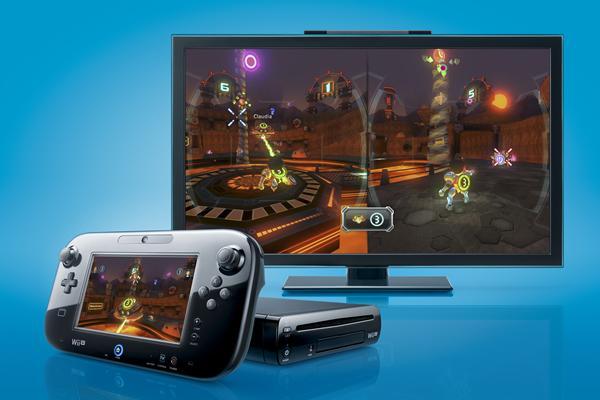
Wii-U Goes on Sale in US ahead of UK launch


Wii U Goes on Sale in US ahead of UK launch

The Nintendo Wii U has launched in America without the much-vaunted TVii service, but is still expected to sell out worldwide.

The Wii U, the first major new console since 2006, will go on sale in the UK from 30 November, with analysts predicting Christmas shortages.
The £299 console features a touchscreen remote control and full-HD graphics. Nintendo President Satoru Iwata has claimed that "Wii U redefines the structure of home entertainment by fundamentally changing how the TV, the game console and the Internet function and interact together."
Launch titles will include New Super Mario Bros. U, Nintendo Land, ZombiU, Darksiders II, Mass Effect 3, FIFA 13 and Batman: Arkham City.
By the end of December 2012, consumers worldwide are expected to have bought 3.5 million Wii U consoles, compared to the 3.1 million Wii consoles that were bought over a similar sales period at the end of 2006, according to IHS Screen Digest.
“It's highly likely that retailers will experience some Wii U shortages in the run-up to Christmas. Some unlucky shoppers may well miss out," said Piers Harding-Rolls, head of games at IHS.

The flagship US TVii feature will now be available sometime in December, Nintendo claimed. It provides a gateway to streaming and pay-TV services through a homepage and search engine, with results integrated so that a user looking for a specific TV show or film would find options ranging from an online service to a rerun on cable.
The company also delayed the availability of online services including Amazon.com’s Instant Video, Google’s YouTube and Netflix on the Wii U.
“The value of Wii U goes well beyond day one,” Reggie Fils-Aime, Nintendo’s North America president, said in a statement. “Nintendo will be enhancing the Wii U experience with continuous updates and new services for Wii U owners.”
Five players can compete against each other at once on the Wii U, but the advent of new services including online multiplayer gaming has led analysts to question Nintendo’s strategy.
They argue the company should get out of the business of making expensive hardware and focus on selling popular games based on its iconic Mario and Zelda characters for play on others’ tablets and smartphones. Company executives say they won’t change course.
“By creating software and marrying it to strong hardware, we believe we create ground-breaking experiences,” Fils-Aime said in a September interview.
Pressure is mounting on President Satoru Iwata to repeat the success of the Wii console after the 3DS handheld player failed to meet expectations, prompting the company to cut its profit goal by 70 percent last month.
Nintendo and rival console makers Microsoft and Sony face increased competition in the game market as consumers turn to smartphones and tablets such as Apple’s iPad to play free games.

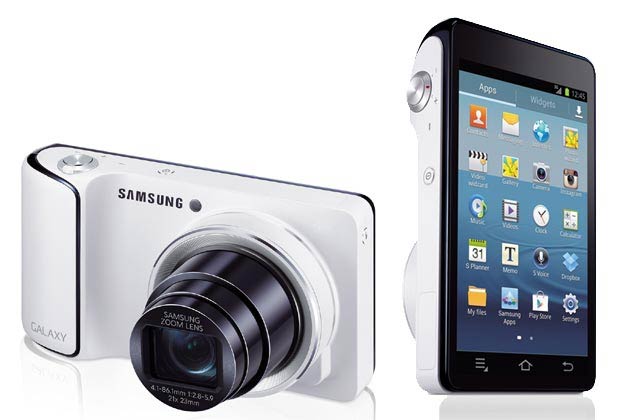
Samsung launches Android-powered Galaxy Camera in India at Rs 29,900

After a sucessfull of galaxy SIII A New gadget of samsung has been launched in india i.e Samsung Android-powered Galaxy Camera.Its Price Was around 29,900.The Galaxy Camera has a 4.8-inch HD Super Clear LCD screen.
Its voice control option allows users to control a number of functions such as 'Zoom in' and 'Shoot' through voice. The camera runs Google's Android 4.1 operating system (Jelly Bean).
Weighing 300g, the camera comes packed with a 1,650mAh battery. It can support micro SDXC card up to 64GB. It is armed with a 1.4GHz Quad-Core processor. The camera is available in the market starting today.


Key specifications

  • 4.8-inch HD Super Clear LCD screen
  • Image Sensor: 16.3 effective megapixel 1/2.3" BSI CMOS
  • Lens: 21x Optical Zoom Lens, 23 mm Wide Angle, F2.8(W) ~ 5.9(T)
  • Display: 121.2 mm (4.8"), 308 ppi, HD Super Clear Touch Display
  • Processor: 1.4GHz Quad-Core processor
  • OS: Android 4.1 (Jelly Bean)
  • Memory: 8GB + memory slot : micro SDSC, micro SDHC, micro SDXC
  • Video Output: HDMI 1.4
  • Connectivity: 3G and WiFi; Bluetooth 4.0; USB 2.0
  • Battery: 1,650 mAh
  • Standby Time: Up to 280 hours (3G)
  • Dimension (WxHxD: 128.7 x 70.8 x 19.1 mm
  • Weight: 300g

Thursday, 22 November 2012

Made in India Tablets That are not Aakash – Alternatives to Aakash 2

Made in India Tablets That are not Aakash – Alternatives to Aakash 2.

The Aakash tablet based its selling idea on two things, firstly as being the cheapest tablet in the market and secondly boasting of being ‘Made in India’ low cost device. Well, surely the Aakash is cheapest and a ‘Made in India’ tablet, but its surely isn’t the only one out there.

A good thing that has come out of the Aakash project is that it has somehow woken up a huge bunch of entrepreneurs to think about providing the Indian masses with low cost Tablet PC solutions to be abreast with changing technology. Only Reliance had come up with a low cost tablet prior to Aakash. Companies like HCL, Milagorw, Zync, Micromax, Karbonn, iBall etc have started producing low cost tablets. A company like BSNL is also not too far behind. This is mainly with a view to compete and survive in the technology market which has created a win-win situation for the consumer who can lay their hands on some really good piece of technology without burning their pockets.

Today the average Indian college student or a middle class individual can bite into the Android Gingerbread experience and have a scoop of Ice Cream Sandwich operating system  at affordable prices thanks to a wide range of ‘home brewed’ tablet computers that are not only affordable but practically made keeping the average Indian consumer in mind. Here’s a look at a few ‘made inIndia’ tablets, which are not Aakash.


HCL ME U1: The IT company, HCL is already a strong name in the computers, laptop and peripherals  market and it was only natural for it to enter the tablet arena by making latest tablets at competitive prices. The HCL ME u1 is both affordable and practical and has pretty solid hardware and specs for its price. Running Android 4.0 ICS, it packs a 1 GHz processor, 512 MB RAM, 4 GB internal storage with expandability option, WIFI, USB, HD video playback, front facing camera and a 7  inch capacitive touch screen. This should take care of most of your everyday needs and entertainment and its Priced at Rs. 7999.

Low-cost alternative Android tablets to AakashBSNL Tpads: Made in collaboration with Pantel Technologies, the Tpad from BSNL comes in the variants of IS 701R, WS 704c and WS 802c priced at Rs. 3250, Rs. 10500 and Rs. 13000 respectively. The overall features are pretty similar on all like the Full HD video playback, WIFI, USB connectivity, Android 2.3 Gingerbread and front facing VGA camera. However the IS 701R has a 2 GB internal storage whereas the WS 704c and WS 802 C have 4GB internal storage with RAM upgraded to 512 MB as opposed to IS 701R’s 256 MB. The processor on the 701R and 704c is 1 GHz whereas on the 802c is at 1.2 GHz and a 8 inch touch screen in place of 7 inch. Both the WS series tabs have a 2Mp rear camera and SIM card support as well.


Milagrow TabTop: The Milagrow TabTop is a tablet computer which offers the most complete connectivity bundle in the market. The tablets come with HDMI, USB Host, mini USB, SD card slot, SIM card Slot, 3.5 mm audio jack, Line Out, LAN port, you name it. The tablets are of more comfortable size at 7.4 and 8.4 inches and have a 4:3 aspect ratio, which gives it the largest screen occupancy. The tabs are in variants of TabTop 7.4, TabTop 7.4 W (which is the first Women Oriented tablet) and the 8 inch Milagrow TabTop 8.4 which are priced at Rs. 10000 for the 7.4 series with 8 GB memory and Rs. 13000 for the 16 GB tab, while the 8.4 is priced at Rs. 24000 for 16 GB version. Other features are pretty standard with Android 2.3 running out of the box with ICS update available and 512 MB RAM for the 7.4 series and 1 GB for the 8.4. Full HD video playback, 1.2 MP front camera on the 7.4 W and 2 Mp back camera on the 8.4with WIFI on all, complete the connectivity powerhouse of these tablet.

Micromax Funbook: The Funbook from the Youth Oriented brand, Micromax is a complete package in relation to its surprisingly low price. At Rs. 6499, this tablet offers a 1.2 GHZ processor with a 512 MB RAM, that runs Andorid 4.0 ICS out of the box. Other features include WIFI, HDMI, USB ports for connectivity and support 3G dongle via USB. The Funbook also plays almost all known formats of video and audio like charm and the HD videos play smooth as silk on this one. The tab comes in a 7 inch capacitive avatar and has a VGA front camera.


Karbonn Smart Tab1: Smart Tab 1 by Karbonn Mobile, comes with a 1.2 GHz processor, 512 MB RAM, expandable up to 32 GB via external SD card, Full HD video playback, 2 MP front facing camera, WIFI, HDMI and USB which also supports 3G connectivity via USB dongle. The tablet comes running Android 4.0.3 Ice Cream Sandwich out of the box and is priced at Rs. 6999.


Apart from the above mentioned tablets, the other Indian tablets that could be looked at are Wish Tel Ira and Ira Thing that come with pretty similar specs as that of the BSNL IS701R come at a price of Rs. 4500 and 5500 respectively.


As you have seen a lot of players have entered the market offering low cost tablets which are indigenously made and are different from Aakash tablet, offering it a tough competition.

Wednesday, 21 November 2012

Changed Features:IPad mini (Verizon LTE)

 Well, what's this, then? Another little tablet from Apple? We surprised ourselves by being quite fond of the first iPad mini, which crossed our desks just a few weeks ago. It strikes the perfect blend of size, performance and capability, but without a proper wireless connection its usability on the road is definitely hampered. Thin and light devices like these were meant to come with you when you leave the house, and you shouldn't leave high-speed data behind.

So, we're very glad to now be testing the $459 LTE version of that very tablet, this one Verizon-flavored. It's every bit as thin and very nearly as light as its WiFi-only predecessor but can send and receive your precious (and also your more disposable) data with way more oomph than before. Is such freedom of connectivity worth the $130 price premium? And, just how bad is the hit to battery life? Let's find out, together.


Hardware:
The hardware here is just what we saw on the WiFi-enabled mini -- other than a little opening for the nano-SIM tray on the lower-right, it's identical to that version we reviewed before. And that's a good thing. We love the thin, light, aluminum-backed design that bears a strong resemblance to the latest iPod touch.

Dimension:
It measures 7.87 x 5.3 inches (200 x 135mm) across and is 7.2mm thick. Up front is the same 7.9-inch, 1,024 x 768 IPS LCD, which has a far lower pixel density than the full-sized Retina iPads, but will still impress with its brightness, contrast and color accuracy, all noticeably improved over the iPad 2.


Wifi-Connectivity:

The WiFi version hits the scales at 308 grams but this one came out just a tick heavier, at 315. Presumably that's because of the extra wireless circuitry inside. With that you get GSM/EDGE, UMTS/HSPA+, DC-HSDPA on the GSM model and CDMA EV-DO Rev. A and B for the other. Both models support LTE, with the American AT&T model handling bands 4 and 17 (for Bell, Rogers and Telus in Canada) and the Sprint/Verizon model covering bands 1, 3, 5, 13 and 25, thus taking care of the rest of the international properties.

Battery Life Comparision to Other SmartPhones:
It's battery life we'd expected to take a hit and we're happy to report that's not the case. In fact, this iPad mini was within spitting distance of the WiFi model, despite having both LTE and WiFi enabled during our standard video run-down test, in which we set the display to a fixed brightness and see how long the machine lasts. The mini on LTE managed 12 hours and 31 minutes.
Tablet Battery Life
Apple iPad mini (Verizon LTE) 12:31
Apple iPad mini (WiFi) 12:43 (WiFi)
Samsung Galaxy Tab 7.7 12:01
Apple iPad (late 2012) 11:08 (WiFi)
Apple iPad 2 10:26
ASUS Eee Pad Transformer Prime 10:17
Kindle Fire HD (7-inch) 9:57
Samsung Galaxy Tab 10.1 9:55
Apple iPad (2012) 9:52 (HSPA) /
9:37 (LTE)
Google Nexus 7 9:49
Microsoft Surface for Windows RT 9:36
Apple iPad 9:33
ASUS Transformer Prime Infinity TF700 9:25
Kindle Fire HD (8.9-inch) 9:01
Pantech Element 9:00
Motorola Xoom 2 8:57
HP TouchPad 8:33
Lenovo IdeaPad K1 8:20
Motorola Xoom 8:20
T-Mobile G-Slate 8:18
Acer Iconia Tab A200 8:16
Samsung Galaxy Tab 7.0 Plus 8:09
Galaxy Note 10.1 8:00
Lenovo ThinkPad Tablet 8:00
Nexus 10 7:26
Archos 101 7:20
RIM BlackBerry PlayBook 7:01
We checked out the LTE speeds as well and they matched an iPhone 5 (also on Verizon) that we tested from the same location. Download speeds typically fell in the 15 - 20 Mbps range, with uploads running 12 - 15. Of course, your speeds may vary -- and they probably will.

Internet access via mobile phones increased by 74% through October

 BRASILIA - The number of Internet accesses for broadband fixed and mobile climbed to 85.5 million in October. The largest growth was in mobile broadband: 74% in the last 12 months. The data are from a survey conducted by the Brazilian Association of Telecommunications (Telebrasil).Of the total 65.5 million mobile connections in the past year, 52.5 million were for the 3G cellular connection, which increased by 74% in national coverage. The number of connections for data terminals - type chip and modem - connecting rod machine, has reached 13 million. The third generation networks are installed in municipalities 3127, where live 87% of the Brazilian population.

The survey also indicated Telebrasil the growth of new broadband network access. Last year, 29.6 million visits were activated, which represents an increase of 53% compared to October 2011. Already fixed broadband accesses reached 20 million in October this year, of which 1.7 million were activated in the last 12 months.

The free broadband networks serving more than 63 000 public institutions of elementary and secondary education. According to Akamai consulting, expert in security and acceleration solutions for internet content, the speed of broadband in Brazil increased 50% in the last two years and reached 2.1 Megabits per second in 2012.

Comparision Between Apple Iphone 5 Or Google Nexus 4|design,Techspecs...

Apple Iphone 5 Soon Launched In india with great stats.more then 1 lakh iphones sells in India.But in market Google Product Also Launched (Google Nexus 4) Which Is also Best cell Google is a name where everyone can trust so thier is great competition between Apple Iphone 5 Or Google Nexus 4.
 More About Apple Iphone 5 Or Google Nexus 4 Was Listed below.


Specifications in Short:
OS:

Design
With your favorite Google Apps, an amazing Photo Sphere camera, cutting edge hardware, and access to your favorite entertainment on Google Play – Nexus 4 puts the best of Google in the palm of your hand.


Size:
The iPhone 5 may be the thinnest and lightest phone around, but it’s lack of size and weight is something every other phone maker today is making up for in screen size and solid feel. Whether it’s the Galaxy Note 2 or the just announced HTC Droid DNA, bigger phones are definitely in, even if they’re harder to use. But does that make them better? Some would say no while others say yes. I think it depends on more than personal preference and the size of your hands.

The Nexus 4 should really be called the Nexus 4.7 for its 4.7″ display, which isn’t necessarily huge but is wide. It boasts a full 768p display (that’s 720p plus 48 extra pixels across, making it wider), while the build is a heavier 139 grams. The Nexus 4, which is built by LG and is essentially the Optimus G but made more specific to Google’s needs, is a good feeling but square phone. The iPhone 5 may feel light to the point of almost cheap, but the Nexus 7 is thick and demanding.

I think more people will be satisfied with the size of the iPhone 5, if only because it isn’t so wide across. At 58.7mm across, the iPhone 5 is much thinner across — and thus easier to grip with a single hand for both one-handed use and making calls — than the 68.7mm Nexus 4. I’m testing the Galaxy Note 2 right now, and after holding the Nexus 4 earlier today, I can say without a doubt that the iPhone’s smaller size does feel better, though not by much.

Winner: iPhone 5, which has a smaller frame that feels cheaper but is more comfortable to hold.

  
Display:
Like nearly every phone today, the Nexus 4 has a large, 720p-ready display, which can play HD videos without downscaling. Though it isn’t exactly 720p, as mentioned above; it’s actually a 1280×768 display, which has slightly more pixels across. This makes the screen a 16:10 aspect ratio instead of traditional widescreen displays (16:9), but the letterboxing is minimal; most users will think it’s the bezel instead of blank pixels.

And the display on the Nexus 4 is gorgeous. It’s the same beautiful display in the Optimus G, which is fantastic. It’s bright and very colorful, and it looks better than the iPhone, if only slightly. But the real kicker is the bigger size (4.7″ vs 4″) and the increased resolution (1280×768 vs 960×640).

Winner: Nexus 4, which has a larger, higher resolution display that provides better colors and contrast than the iPhone 5.


Operating System:

As time goes on and Android gets better and better, I always wonder when my 3-year-old prediction that Android will catch up with iOS will come true. I don’t think the time is now, but we’re certainly getting there. And I’ll tell you why.
First, Android apps still aren’t as good as iOS apps. Forgetting about the differences between tablet and smartphone apps (of which there is none for Android, which is a serious problem), Android’s apps tend to be less stable and less usable than iOS apps. I’ve used countless identical apps on both devices, and while the programming clearly is the same, it’s the little things that are different and make the experience in favor of iOS. Like how smooth Angry Birds is on iOS; sure, on iOS you have to pay for it, but even the paid version on Android just doesn’t flow as well.
But those little quirks inherent in Android apps aren’t everything. iOS has a seriously problem with RAM which has only recently been addressed with the iPhone 5 and iPad (4th gen). On any older device the RAM is almost constantly used up, meaning anytime you exit an app and open a new one, the previous app is closed. Some apps are better than others, but it’s a serious problem for iPhone 4, 4S, and iPad 2 and iPad (3rd gen) owners. With the iPhone 5 it isn’t; the 1GB of RAM is enough in every tested case.
The number of available apps is also now negligible, but iOS has moregoodapps. iOS is also easier to use for everyday users. Android makes sense instantly as well, but every manufacturer has a different way of doing things from Google. Folders don’t work the same across all devices, and neither does activating Wi-Fi, or Bluetooth, or even answering calls. This fragmentation is a problem, and while the openness of Android is great, Google does have to draw the line somewhere.

So I’ve reached the following conclusion regarding iOS vs Android: when it comes to the OS, and only the OS, the two are now nearly tied. Android has far more bugs and quirks per device than the iOS, but that’s to be expected. And iOS 6 had so few improvements that it’s hard to say it was an improvement at all, especially with the loss of Google Maps and “gaining” Apple Maps.

But when it comes to apps, the comparison is still far in Apple’s favor. You can claim that free apps is better than perfectly functioning apps, but that’s not true for everyday users. If given a choice, sure, free is better, but part f the reason Apple is successful and why developers don’t give the option for a free version is because they know they can make the money from iOS users. And because the number of hardware units is limited (two iPad sizes, three iPhone sizes), development is easier and costs are lower.

In the case of the Nexus 4 vs iPhone 5, the Nexus 4 has the advantage over all other Android devices because it uses stock Android 4.2, so it’ll receive updates first. But aside from that it’s still Android. But — and this is a big but — at this point if Apple doesn’t seriously step up it’s software development, Android will overtake iOS as the better mobile operating system by the next major release.

Winner: iOS 6, which is only slightly better than Android, but mostly due to app quality and general OS quality. But that won’t last for long the way both Apple and Google are going.

Processor:

The thing about the Nexus 4 and iPhone 5 when it comes to processing power is that Apple has gone diagnally forward by making it’s own chip design based on the ARM Cortex A9, supplementing the previous dual-core architecture with a tri-core GPU, a higher-clocked CPU, which in turn provides some really stunning performance. 
In all of my tests the iPhone 5 is way ahead of the competition not only when it comes to web-page rendering but in all performance angles. Gaming, javascript, general use, and applications all run on the iPhone 5 like that’s how the developers meant for it to run, and that’s thanks to the increase in RAM to 1GB and the new A6 (Swift) processor.

The Nexus 4, however, uses the newest quad-core Krait processor from Qualcomm, which is pretty remarkable in its own right. But based on the numbers I have from the Optimus G, it isn’t as good. It’s getting there; just like with the OS, Android hardware manufacturers are catching up with Apple’s hardware specs faster than Apple can pump out the latest designs, as we’ve seen with the Nexus 10 jumping the shark with the new Cortex A15 CPU.

But when it comes to these two devices, the Nexus 4 lags behind slightly. It may have a seemingly faster 1.5GHz quad-core processor with a quad-core GPU, compared to the 1.3GHz dual-core CPU and tri-core GPU, but the actual architecture and implementation is better on the iPhone 5. Remember, speed isn’t everything, though without more numbers openly available (you can blame marketing and a lack of recognizable education for that), it would be impossible to tell what’s better. But I can state without a doubt that the iPhone 5 is better when it comes to the processor performance.

Winner: iPhone 5, which boasts better performance across the board in benchmarks taken. 

Pricing:

Google Nexus Price Starts FRom $ 299 Where As When Apple launched the iPhone 5 yesterday , only contract pricing for the device was revealed for the US market, starting from $199 for the 16GB version ,  $299 for the 32GB version and $399 for the 64GB version.

 We did tell you about the Unlocked iPhone 5 prices for UK and Singapore . But now the Apple US site is displaying some prices for the iPhone which seems like the prices for the unlocked versions. 
It might also be a typo as these were the prices at which the iPhone 4S was available previously.

Winner: iPhone 5, which is cheaper thanks to subsidies, and thanks to additional capacity options.

Skype New Version For Android! Best For Tablets Or Ipads,Have A Look

Skype Introduced Its new version v3.0,runs on Android which is optimised to scale to tablet's bigger screen. The update features a restyled interface. With our redesigned look and feel, Skype looks great no matter what screen size you have - either on a smaller Android phone or the more spacious display of your tablet," said said Derek Snyder, head of Mobile Product Marketing, Skype.

Description

Make free Skype-to-Skype video calls, and call phones at Skype rates on the moveFree voice and video calls to anyone else on Skype, whether they’re on an Android, iPhone, Mac or PC, as well as IMs to your friends and family, no matter where they are.
Features:
- Skype to Skype IMs, video and voice calls are free* over 3G or WiFi.
- Make low-cost calls and SMS to mobiles or landlines from your Android smartphone or tablet.
- Send pictures, videos and files to any of your contacts.
- Enjoy high-quality sound when you call anyone else on Skype.
- Talk face to face or show what you’re seeing with front and rear-facing cameras.
-Talk to your Windows Live Messenger friends on Skype. Sign into Skype with your Microsoft account and have your Messenger, Hotmail and Outlook contacts in one place.
For more information, visit the Skype for Android FAQ page: http://goo.gl/8OpEo.
Due to Android restrictions, devices running Android 2.2 will only be able to use the rear-facing camera. Devices with Android 2.3 or higher will be able to use both front and rear-facing cameras

Suitable For Tablets
The update also allows users to sign in with a Microsoft account. Besides, the company also claims to have improved the audio quality. 
 Users can download Skype 3.0 for Android from Google Play. To avail the update, users will need an Android device running v2.1 and up.


Samsung Galaxy S4 Will Comes With 13 mega-pixel Camera And with Full HD Display....

Samsung Galaxy S4 Was Coming Soon!.The Date OF Samsung Galaxy Was Revieled
Samsung Galaxy S IV rumoured to have full-HD display, 13-megapixel camera..In An Interview It was Stated That Galaxy S4 will have a 4.99-inch Super AMOLED display with 1920*1080 resolution, Giving it a pixel density of 441PPI, 2 GHz quad-core Exynos processor and an 8-core GPU .And It Should We Released On First Half OF 2013 may we in FEB or in March. It would make sense for Samsung's next flagship device to be its first smartphones with full-HD display.According to another interview it was stated that  Galaxy S IV will feature a 13-megapixel camera, a significant upgrade over the Galaxy S III's 8-megapixel rear shooter.

 This Is A pic Of Samsung Galaxy S4..

Read This Article For More Information Samsung Galaxy S4

According to a new Korean source, Samsung will be showing its 1080p Super AMOLED displays off at CES in January. And yes, the lack of a + sign at the end of Super AMOLED would suggest that Samsung is sticking with those PenTile displays, but let's not read too much into rumours, eh?

Moving on to those processor rumours, it's being suggested that the Samsung Galaxy S4 will run on a 2GHz quad-core variant of Samsung's own Exynos 5450 CPU. The dual-core version of this is what powers the Google Nexus 10 tablet, so it's a meaty bit of kit.

Specifications of Galaxy S IV According to rumours:
  • Full HD Display
  • 13 megapixel Camera
  • 2 GHz quad-core Exynos processor
  • 8-core GPU
  • 1080p display and A15 CPU
  • 4.99-inch Super AMOLED display with 1920*1080 resolution
 This Is A pic Of Samsung Galaxy S3..
Keep reading my website because some more specification will soon updating
Thanks
(:If You Like This Post Then Don't Forget TO Comment:)

Hello